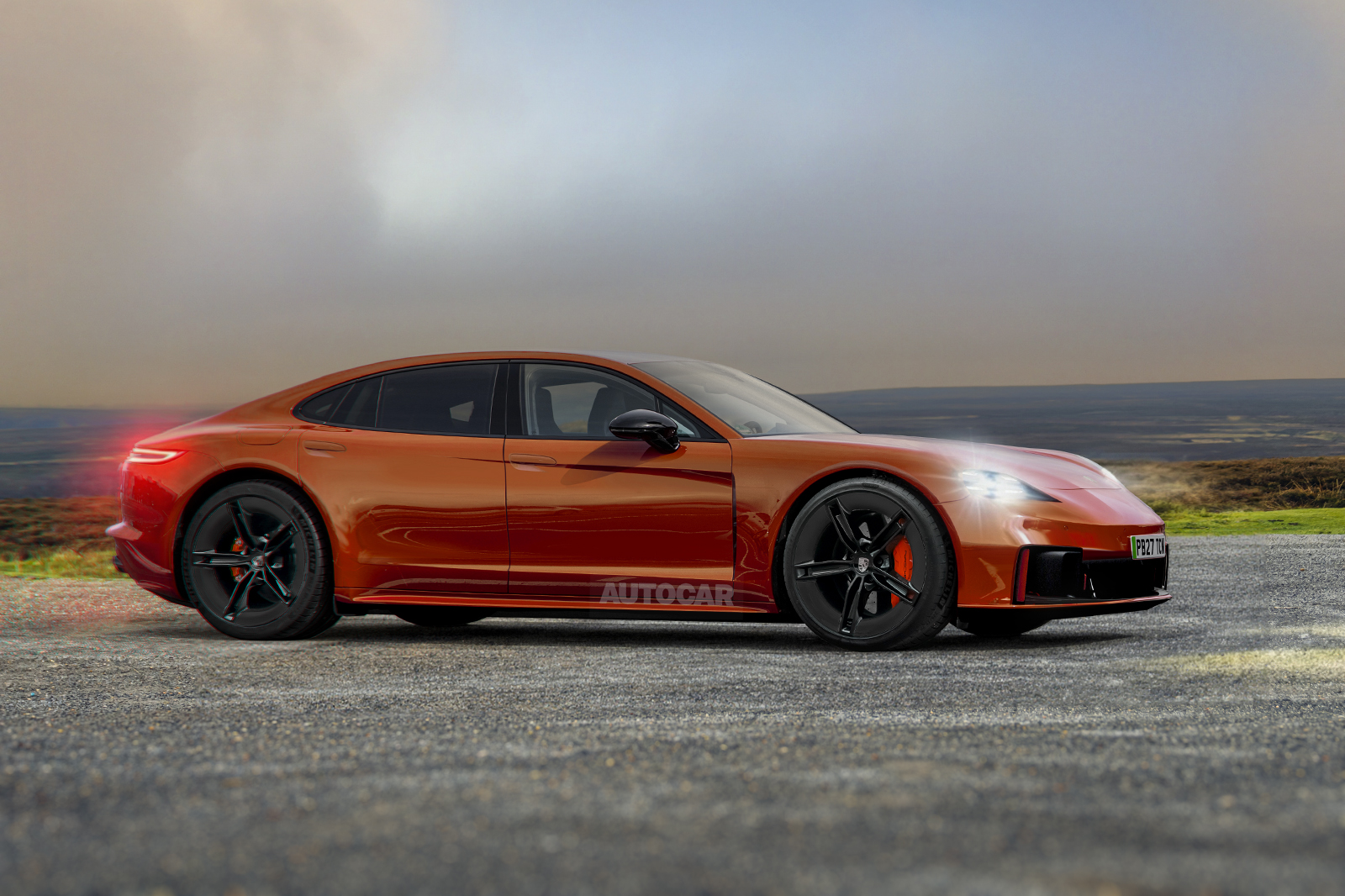
In a bold move that has sent ripples through the automotive industry, Porsche is reportedly considering a significant structural change to its flagship saloon lineup. As the brand navigates a shifting global market and the rising costs of electric vehicle development, rumors suggest that the Porsche Taycan and Porsche Panamera could eventually be merged into a single, cohesive model identity. This potential consolidation is not just about streamlining production; it is a calculated effort by CEO Michael Leiters to optimize research and development spending while ensuring the brand remains profitable in an increasingly complex landscape.
For years, the Panamera and Taycan have existed as distinct pillars of the Porsche portfolio. The Panamera, a masterclass in internal combustion engine (ICE) and hybrid engineering, has long served as the benchmark for luxury performance saloons. Meanwhile, the Taycan represents Porsche’s bold leap into the all-electric future, showcasing cutting-edge 800-volt charging architecture and blistering acceleration. Maintaining two separate, high-performance platforms is an incredibly expensive endeavor. By bringing these two models under one umbrella, Porsche could mirror the successful strategy seen with the Macan and Cayenne, which now feature distinct ICE and electric versions sharing a common model name.
The financial pressure is clear. Porsche has faced challenges with project delays and the massive capital required for next-generation platform development. Integrating the development cycles for the successor models could allow Porsche to share components, reduce manufacturing complexity, and potentially offer customers a clearer path to choosing their preferred powertrain—whether that be a high-revving petrol engine, a plug-in hybrid (PHEV), or a pure battery electric vehicle (BEV). Interestingly, insiders note that this decision was heavily influenced by the internal ‘Porsche Culture’ of engineering excellence, where engineers argued that separate development tracks were leading to redundant chassis tuning efforts that could be better spent on software integration.
If Porsche proceeds with this merger, the design challenge will be immense. The Panamera is currently built on the MSB platform, while the Taycan utilizes the J1 architecture. Engineering a single model line that can accommodate these disparate needs requires significant flexibility. We expect that any future replacement would likely adopt a modular approach, allowing for different floor pans to support either a battery pack or a fuel tank and transmission tunnel. Visually, we might see a unified design language that emphasizes the Porsche DNA, with distinct aerodynamic profiles tailored for each powertrain variant to maximize efficiency and performance. The current Panamera’s wheelbase and the Taycan‘s footprint are relatively close, providing a solid starting point for a unified design.
Inside, the next generation of this unified saloon will undoubtedly push the boundaries of digital cockpit technology. We anticipate a heavy reliance on the latest Porsche Communication Management (PCM) system, featuring ultra-high-resolution displays and advanced AI-assisted driver aids. The interior will likely retain the classic Porsche focus on the driver, with a low seating position and a high-mounted center console, while integrating sustainable, high-end materials that align with modern luxury expectations. Expect a seamless user interface that manages everything from regenerative braking intensity in the electric model to the active exhaust note of the combustion variants.
Regardless of whether you choose the combustion or electric variant, the performance will be quintessential Porsche. The electric powertrain is expected to continue its trajectory toward even faster charging times and increased energy density, while the hybrid variants will likely see improvements in pure-electric range and overall efficiency. The goal is to ensure that the 0-100 km/h acceleration remains exhilarating across the entire range. By consolidating, Porsche can standardize the chassis tuning philosophy, ensuring that the active suspension management and torque vectoring systems provide that signature Porsche handling, regardless of what lies beneath the hood. The engineering team is reportedly obsessed with maintaining the weight distribution balance that has made the current Panamera a favorite among driving enthusiasts.
It is worth noting that Porsche has always thrived on internal competition. The rivalry between the traditionalists who favor the roar of a flat-six or V8 and the pioneers who embrace the silent, instant torque of an electric motor has defined this decade. Historically, Porsche has always managed to balance these two worlds, from the early days of the 911 to the modern Cayenne. This potential merger is not an end to the combustion engine, but rather a strategic evolution to ensure the brand’s survival and dominance in a changing world. By unifying these lines, Porsche aims to create a singular, definitive vision of what a luxury performance saloon should be in the 21st century, ensuring that no matter which powertrain a client selects, they are receiving the absolute pinnacle of Zuffenhausen engineering. As development progresses, the industry will be watching closely to see if this platform consolidation becomes the new gold standard for luxury manufacturers globally.
Vehicle Specifications
- Powertrain: Multi-variant (ICE, PHEV, BEV)
- Output/Torque: Targeted 500hp to 1000hp+ range
- Drivetrain: Rear-wheel drive and All-wheel drive
- Transmission: Multi-speed automatic (ICE/Hybrid) / 2-speed (EV)
- Battery/Range: 95kWh to 120kWh capacity (Targeting 500+ miles WLTP)
- Curb Weight: Expected range 2,100kg – 2,400kg
- 0-100 km/h: Sub-3.0s for top-tier Turbo S variants
- Top Speed: Up to 320 km/h depending on powertrain
- Architecture: Modular Scalable Platform
- Charging: 800-volt high-speed DC charging capability
Key Keywords
- Porsche Taycan
- Porsche Panamera
- Porsche electric vehicles
- Porsche future models
- automotive manufacturing news
- hybrid luxury cars
- Porsche performance
* Source: Autocar RSS Feed