The Dawn of the Shiftless Era
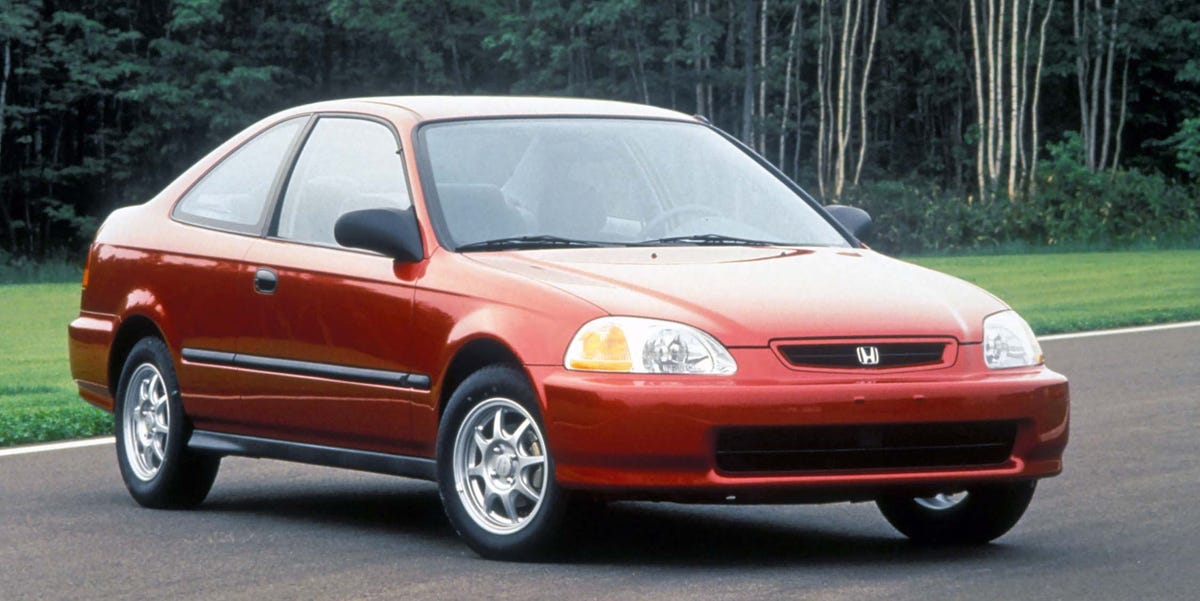
In the mid-nineties, the automotive world was obsessed with finding the perfect balance between fuel economy and driver engagement. Enter the 1996 Honda Civic HX, a vehicle that wasn’t just another trim level in a massive lineup, but a genuine experiment in engineering. At its heart was a Continuously Variable Transmission, or CVT, a technology that promised to eliminate the dreaded shift shock while optimizing engine efficiency. It was a daring move for Honda, a company known for its mechanical prowess, to ditch the traditional gear set in favor of a belt-driven system that felt, at the time, like something from a science fiction novel.
The Civic HX was marketed as the efficiency champion, designed for those who wanted the legendary reliability of a Honda but were curious about the future of drivetrain technology. While the rest of the world was still clinging to four-speed automatics, the HX offered a seamless flow of power that was remarkably smooth. It was a bold statement that gear changes might soon become a thing of the past, setting the stage for the widespread adoption of belt-driven systems we see in almost every modern commuter vehicle today.
Exterior Design: Subtle Efficiency
The exterior of the 1996 Civic HX didn’t scream for attention, and that was by design. It featured the classic sixth-generation Civic styling, characterized by a low hood line, slim headlights, and a clean, aerodynamic profile that helped it cheat the wind. The HX trim was distinguished by unique, lightweight alloy wheels designed to reduce unsprung mass and improve rolling resistance. Every curve of the bodywork served a purpose, aiming to minimize drag to squeeze every possible mile out of a gallon of gasoline. It was a masterclass in aerodynamic efficiency, proving that a car didn’t need to look like a spaceship to be technically advanced. The build quality was typical 1990s Honda, with tight panel gaps and a finish that stood the test of time, proving that budget-conscious cars could still feel premium.
Beyond the simple aesthetics, the body panels were engineered to manage airflow specifically to aid the high-efficiency powertrain. The front fascia featured a subtle air dam that reduced turbulence under the chassis, while the rear trunk lip provided just enough downforce for highway stability without creating excessive drag. This holistic approach to vehicle design meant that the HX was not just an engine modification project, but a cohesive machine built for the singular purpose of range maximization.
Interior Comfort and Infotainment
Stepping inside the 1996 Civic HX, you are greeted by a cabin that prioritizes ergonomics over flashiness. The dashboard is laid out in a logical, driver-focused fashion, with clear analog gauges that are easy to read at a glance. While the infotainment system—if we can call it that—consisted of a basic AM/FM cassette radio, the focus was clearly on the driving experience rather than digital distractions. The seats were upholstered in durable, high-quality fabric that offered surprising support for long highway drives. Despite its modest price point, the interior materials felt robust, reinforcing the brand’s reputation for interior longevity. There was plenty of headroom and legroom for front-seat passengers, making the Civic feel much larger than its subcompact footprint suggested. It was a space designed for the daily commute, free from the clutter that defines modern vehicle interiors.
The tactile feedback from the buttons and switches offered a satisfying, mechanical click that is often missing from modern touch-sensitive interfaces. The climate controls were intuitive, and the HVAC system was surprisingly powerful for such a small cabin, quickly cooling the interior even on the hottest summer days. By omitting heavy, complex electronic systems, Honda ensured that the cabin would remain rattle-free and functional for decades, a hallmark of 90s Japanese manufacturing. It was a sanctuary of simplicity, designed to allow the driver to focus entirely on the road and the unique sensation of the CVT drivetrain.
Performance and Powertrain Dynamics
The heart of the Civic HX is the 1.6-liter VTEC engine, paired exclusively with that pioneering CVT gearbox. Unlike a standard automatic that steps through fixed ratios, this transmission allowed the engine to stay in its peak power band during acceleration. The result was a driving sensation that felt entirely different from anything else on the road in 1996. While the engine output was modest, the efficiency gains were undeniable, providing a unique personality that rewarded gentle throttle inputs. The handling characteristics were classic Honda, with a responsive steering rack and a suspension setup that felt surprisingly composed over rough pavement. It wasn’t a sports car, but it was nimble, eager to turn in, and incredibly predictable at the limit. The braking performance was more than adequate for the vehicle’s weight, providing a solid, confident pedal feel that inspired trust in all driving conditions.
The integration of the VTEC system with the CVT was particularly clever. When the driver demanded more power, the transmission would instantly adjust to allow the engine to rev higher, entering the VTEC engagement zone for a brief boost in torque. This seamless transition was a technical marvel at the time, demonstrating that a fuel-sipping economy car could still possess a spirited character. This powertrain configuration proved that efficiency and performance weren’t mutually exclusive, provided the transmission was intelligent enough to manage the engine’s output effectively.
The Development Story: Honda’s Risky Gamble
It is important to remember that in the 1990s, the CVT technology was still in its infancy for passenger vehicles. Honda faced immense pressure from competitors like Toyota and Nissan, who were also experimenting with alternative transmissions. The development of the HX was a strategic play to prove that fuel efficiency did not have to come at the expense of a smooth, uninterrupted power delivery. This period in Honda history was defined by a culture of fearless engineering, where the company was willing to push boundaries even if the market wasn’t entirely ready. The HX stands as a testament to that era, a bridge between the mechanical past and the computerized future of the automotive industry.
One interesting detail often overlooked is that the Civic HX’s CVT was actually designed to be quite robust, despite the early skepticism from the public.
Engineers spent thousands of hours refining the steel belt and pulley surfaces to ensure they wouldn’t slip or degrade under normal operating conditions.
There is a story among Honda enthusiasts that the first prototypes were so efficient that the test drivers often forgot they were driving a car with an automatic transmission because the engine noise remained so constant during acceleration.
This was a psychological hurdle for drivers used to the shift-points of traditional automatics, but it eventually became the standard for modern eco-driving.
The HX was a visionary project, proving that the industry could pivot toward sustainability without losing the joy of driving.
Vehicle Specifications
- Powertrain: 1.6-liter SOHC VTEC I4
- Output/Torque: 115 hp / 104 lb-ft (estimated)
- Drivetrain: Front-wheel drive
- Transmission: Continuously Variable Transmission (CVT)
- Battery/Range: Not applicable
- Curb Weight: Approximately 2,300 lbs
- 0-100 km/h: Not disclosed
- Top Speed: Not disclosed
- Dimensions: 175.1 in (L) x 67.1 in (W) x 54.1 in (H)
- Wheelbase: 103.2 inches
Key Keywords
- 1996 Honda Civic HX
- CVT transmission
- Honda VTEC engine
- classic Honda review
- fuel efficient cars
- automotive engineering history
* Source: Latest Content – Car and Driver