A Watershed Moment in Automotive Engineering
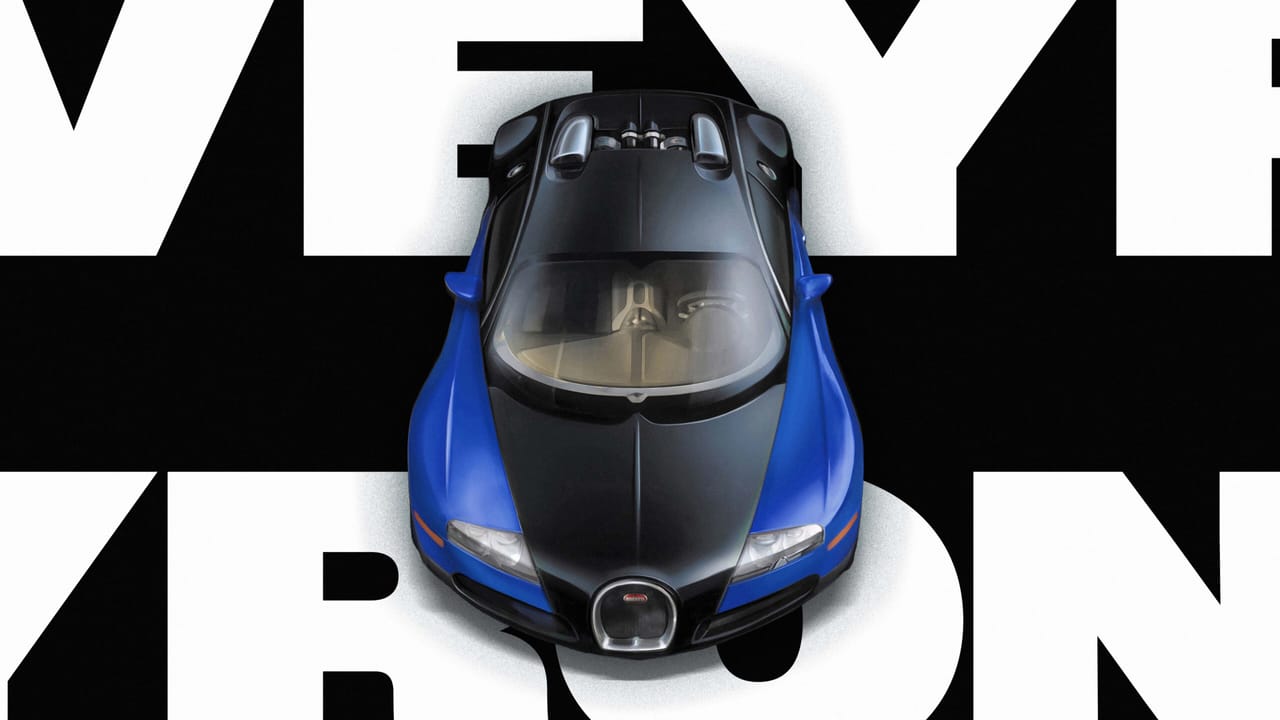
When the Bugatti Veyron first emerged from the shadows of Molsheim, it wasn’t just another fast car; it was a technological manifesto. Ferdinand Piëch, the mastermind behind the project, had a singular goal: to create a production vehicle capable of exceeding 400 km/h while remaining as civilized to drive as a luxury sedan. It was an audacious claim that many industry experts thought was impossible to achieve. The engineering team faced immense pressure to deliver, often working under the watchful eye of Piëch himself, who was known for his uncompromising standards.
The development of the Veyron was a masterclass in overcoming engineering nightmares. The sheer force required to push a car through the air at such extreme speeds meant that cooling, aerodynamics, and structural rigidity had to be rethought from the ground up. The result was a W16 engine featuring four turbochargers that would eventually define the brand’s identity for two decades. One fascinating anecdote from the development phase involves the tires; Bugatti engineers realized that standard high-performance rubber would disintegrate at top speed, requiring a bespoke partnership with Michelin to create tires capable of withstanding the extreme centrifugal forces generated at 400 km/h.
The Powertrain: A Quad-Turbo Masterpiece
At the heart of the beast lies the iconic 8.0-liter W16 engine. This masterpiece of mechanical engineering essentially combined two V8 engines into one block, creating an incredibly compact yet potent powerplant. With four turbochargers working in harmony, the engine produces an astonishing 1,001 horsepower in its original iteration, a figure that was unheard of in a road-legal production car at the time of its launch. The engine is a complex web of precision-engineered components, designed to operate under immense thermal stress while maintaining the refinement of a high-end luxury vehicle.
Managing that immense output required a complex all-wheel-drive system and a lightning-fast dual-clutch transmission. The torque delivery is relentless, pushing the Veyron from a standstill to 100 km/h in just 2.5 seconds. The engineering team had to design a cooling system with ten radiators to ensure the engine didn’t overheat while pushing the limits of thermodynamic endurance. This cooling array is a testament to the sheer scale of the engineering effort, as the car generates enough heat at full throttle to warm a small office building, necessitating advanced thermal management strategies.
Exterior Design and Aerodynamic Prowess
The exterior of the Veyron is a study in form following function, yet it retains an unmistakable elegance. Every curve, vent, and air intake serves a specific purpose, whether it is feeding cold air to the massive engine or generating downforce to keep the car glued to the tarmac at 400 km/h. The active rear spoiler is a crucial element, deploying automatically to act as an airbrake during emergency stops, providing a massive amount of drag to assist the carbon-ceramic brakes in bringing the vehicle to a halt from terminal velocity.
The iconic two-tone paint schemes were not just an aesthetic choice; they were a nod to Bugatti’s rich racing heritage. The carbon-fiber monocoque chassis provides the necessary rigidity to handle the car’s immense power while keeping the weight as balanced as possible. It is a car that looks just as striking parked at a gala as it does tearing up the Mulsanne straight. Every panel gap and surface transition was meticulously crafted to ensure laminar airflow, minimizing turbulence and ensuring that the car remained stable even at speeds where most vehicles would begin to feel disconnected from the road.
Inside the Cockpit: Luxury Meets High Performance
Stepping into the interior of the Veyron is a stark contrast to the aggressive performance capabilities of the machine. The cabin is swathed in the finest hand-stitched leather, brushed aluminum, and high-quality materials that define the Bugatti brand. Unlike many stripped-out track specials, the Veyron offers a genuine luxury grand touring experience. The seats are designed to provide support during high-speed cornering while remaining comfortable enough for trans-continental travel, a duality that few manufacturers have ever managed to balance so perfectly.
The infotainment and instrumentation are deliberately understated. You won’t find massive, distracting touchscreens here; instead, you get tactile, jewel-like dials that provide essential data.
The focus is entirely on the driver, ensuring that the interface between man and machine is seamless.
The audio system, developed in partnership with premium sound brands, is tuned to provide acoustic clarity even at elevated speeds, proving that Bugatti prioritized the occupant experience just as highly as they prioritized the mechanical performance.
It is a cabin that feels like a bespoke sanctuary, insulated from the violent speed occurring just outside the engine firewall.
The Rivalry and the Legacy
The Veyron’s development was fueled by a fierce internal desire within the Volkswagen Group to dominate the supercar hierarchy. It effectively killed the competition by setting benchmarks that others could only dream of hitting. The top speed of 407 km/h was the headline, but it was the reliability and the ability to drive it daily that truly set it apart from its predecessors. It was not a temperamental machine that required a support crew; it was a reliable, albeit complex, piece of machinery that could be driven to the grocery store or to a track day with equal ease.
The legacy of the Veyron is not just about the numbers; it is about the courage to break boundaries. It proved that extreme performance and daily usability were not mutually exclusive.
Even today, the Veyron remains a symbol of the pinnacle of the internal combustion era, a car that changed everything we knew about what a road-legal vehicle could achieve.
It opened the door for a new generation of hypercars, yet it remains the gold standard against which all other speed-focused machines are measured, representing a singular moment in history where engineering ambition met limitless resources.
Vehicle Specifications
- Powertrain: 8.0-liter quad-turbocharged W16 engine
- Output/Torque: 1,001 horsepower / 1,250 Nm of torque
- Drivetrain: Permanent all-wheel drive
- Transmission: 7-speed dual-clutch transmission
- Battery/Range: Not applicable (Internal Combustion Engine)
- Curb Weight: Approximately 1,888 kg
- 0-100 km/h: 2.5 seconds
- Top Speed: 407 km/h
- Dimensions: Length 4,462 mm / Width 1,998 mm / Height 1,159 mm
- Wheelbase: 2,710 mm
Key Keywords
- Bugatti Veyron
- W16 engine
- fastest production car
- hypercar history
- Ferdinand Piech
- automotive engineering
* Source: topgear.com