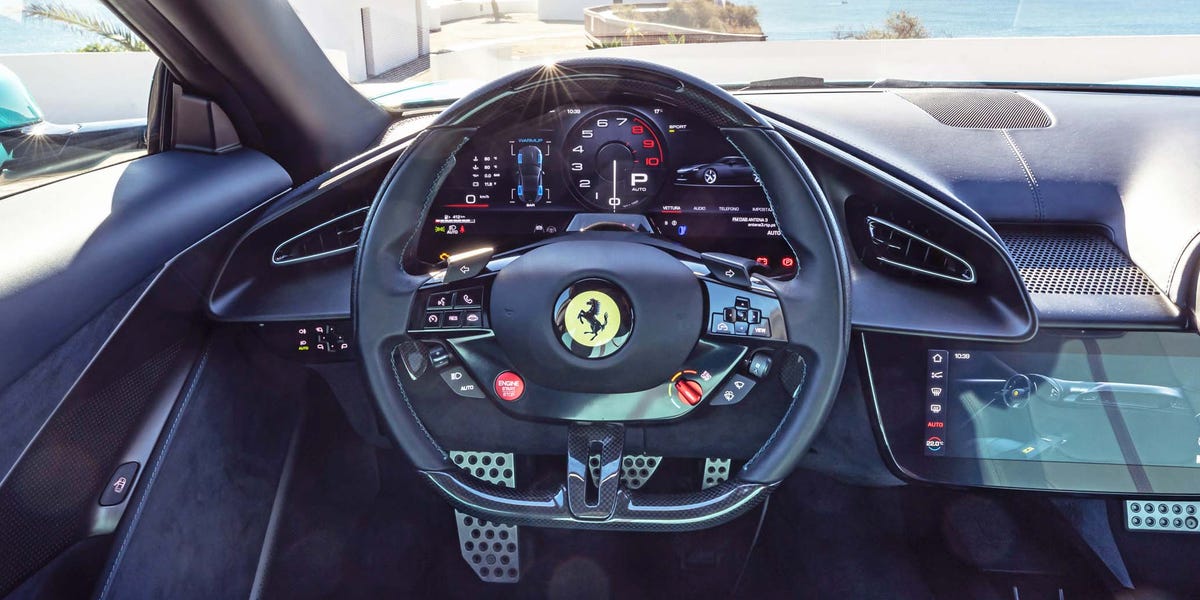
In the high-stakes world of automotive luxury, the pursuit of minimalism has often come at the expense of functionality. For several years, manufacturers have prioritized flush, glass-like surfaces and haptic touch controls over the satisfying, reliable click of a physical switch. Ferrari, an icon of performance and engineering, has finally taken a stand against this trend by introducing a comprehensive retrofit steering wheel program. This initiative allows owners to replace their frustrating touch-sensitive interfaces with real, tactile buttons, signaling a massive shift in how the brand approaches human-machine interaction.
The exterior design of a Ferrari has always been a masterpiece of aerodynamics, but the interior is where the driver actually lives. The cockpit of a modern Ferrari is designed to be a command center, yet the recent move toward haptic steering wheels created a disconnect. Imagine navigating a tight hairpin turn on a mountain pass, only to have your finger slip across a flat surface, accidentally toggling a wiper or volume setting instead of the Manettino drive mode. It is a distraction that no driver of a 200-mph machine should ever have to endure. By returning to physical buttons, Ferrari is acknowledging that when you are managing massive horsepower, precision is non-negotiable.
There is an interesting story behind this shift: it was reportedly sparked by feedback from long-time Ferrari collectors and professional test drivers who found the haptic interfaces to be fundamentally incompatible with high-speed, dynamic driving. These drivers, who spend hours on the track, needed to adjust chassis control settings and traction control without taking their eyes off the apex. The haptic feedback was simply too ambiguous. Ferrari’s leadership listened, and the decision to offer a physical alternative is a rare, humble admission that even the most prestigious brand can prioritize aesthetic trends over the ergonomic performance required by their elite clientele.
Inside the interior cabin, the presence of physical buttons provides a sense of intentionality. The infotainment system remains sophisticated, offering high-resolution displays and seamless connectivity, but the core driving functions are being reclaimed by the analog world. This is not a regression; it is an evolution toward sensory-focused engineering. When you engage a button on a modern Ferrari steering wheel, you get that distinct auditory feedback and resistance that only a mechanical switch can provide. It makes every input feel deliberate, connecting the driver more deeply to the vehicle’s powertrain and mechanical soul.
The performance and powertrain of these vehicles remain the gold standard of the industry. Whether you are piloting a V8 twin-turbo or the legendary naturally aspirated V12, the engine is the heart of the experience. The steering wheel is the primary interface through which you command this raw power. When equipped with physical controls, the integration of electronic differentials and gear shifting becomes second nature. You are no longer guessing; you are commanding. This is vital for those who take their cars to track days, where the difference between a perfect lap and a spin often comes down to millisecond-perfect adjustments of the car’s electronic parameters.
This move is likely to have a ripple effect across the entire high-performance automotive sector. Brands like Porsche and Lamborghini have also experimented with touch-heavy interiors, but the market’s reaction has been increasingly skeptical. By reclaiming the steering wheel as a tactile, functional interface, Ferrari is setting a new standard for luxury automotive design. It proves that a car can be futuristic and technologically advanced without sacrificing the tactile precision that defines the driving experience. This is a massive victory for enthusiasts who demand that their supercars be designed for the driver, not just for the showroom floor.
Looking forward, we anticipate that the future of Ferrari interiors will be a hybrid of the two worlds. We will continue to see stunning, high-resolution digital screens for navigation, climate control, and multimedia, but the fundamental driving dynamics will remain controlled by physical, tactile switches. This balance allows the driver to enjoy the best of both worlds: the convenience of modern software and the unwavering reliability of mechanical inputs. It is a commitment to the Prancing Horse legacy that ensures every Ferrari remains, first and foremost, a driver’s machine.
Vehicle Specifications
- Powertrain: V8 Twin-Turbo / Naturally Aspirated V12 / Hybrid
- Output: 600hp to 1,000+ hp depending on configuration
- Drivetrain: Rear-Wheel Drive or All-Wheel Drive
- Transmission: 8-Speed Dual-Clutch F1 Transmission
- Chassis: Lightweight Aluminum and Carbon Fiber construction
- 0-100 km/h: 2.5 to 2.9 seconds for flagship models
- Top Speed: Exceeds 340 km/h (211 mph)
- Interface: Tactile physical buttons for drive modes and signals
- Infotainment: Multi-display high-resolution digital cockpit
Key Keywords
- Ferrari steering wheel
- tactile buttons
- haptic controls
- automotive interior
- driving dynamics
* Source: Latest Content – Car and Driver